
The Differences Between Mice & Rats
Rodents are more than just a nuisance—they can damage your home, contaminate food, and spread disease. Whether you live in Denver, Colorado Springs, Boulder, or anywhere across Northern Colorado, spotting a mouse or rat inside your home is a signal to act fast and protect your property.
Quick Answer: How Can I Tell a Mouse from a Rat?
Mice are small, leave tiny, pointed droppings, and gnaw lightly; rats are larger, leave bigger, rounded droppings, and cause more damage.

Identifying Rodents in Your Colorado Home
Spotted a rodent in your house? Knowing whether it’s a mouse or a rat is the first step to stopping the problem before it gets worse. Here’s a quick way to tell them apart:
- Size: Mice are small and lightweight, while rats are noticeably larger and heavier.
- Head/Nose: Mice have pointed noses; rats have blunter, heavier noses.
- Ears (relative to head): Mice have larger ears; rats’ ears are smaller.
Not sure which rodent is invading your home? Our team can identify the problem quickly and recommend the most effective, environmentally responsible plan for your property.
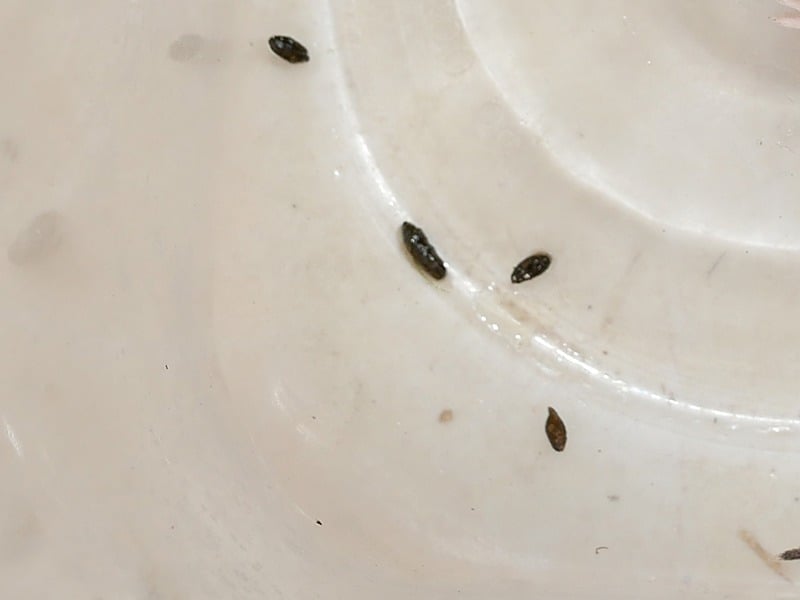
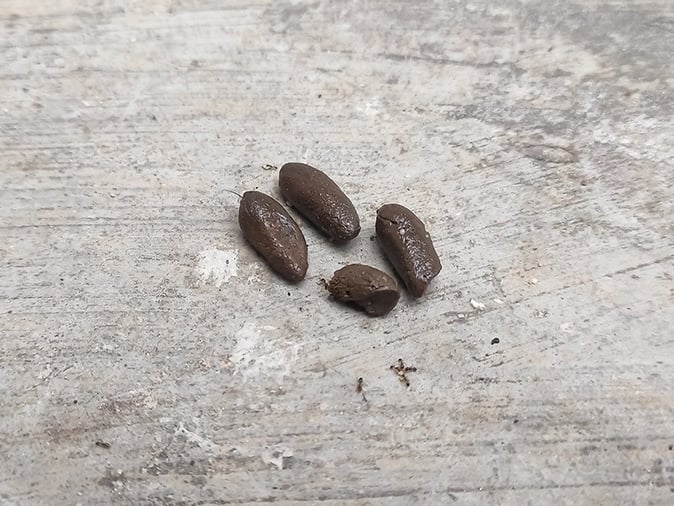
Mouse Droppings vs. Rat Droppings (size and shape)
Droppings are one of the fastest ways to tell whether you’re dealing with mice or rats.
- Mouse droppings: Small, pointed, about the size of a grain of rice
- Rat droppings: Larger, thicker, and rounded at the ends
Finding droppings helps narrow down the pest — but it also signals active rodent presence.
When to call for rodent control: If you’re seeing droppings in multiple areas or finding new droppings regularly, the infestation is likely active and growing.
Do Mice and Rats Multiply at the Same Rate?
No, and this difference affects how quickly an infestation grows inside a home.
- Mice reproduce faster, with more frequent litters and quicker maturity. A female mouse can produce 5–10 litters per year, and young mice reach breeding age quickly.
- Rats reproduce more slowly, but their litters are typically larger, and each rat tends to cause more noticeable damage.
For homeowners, the key difference is how the problem shows up: mouse infestations often spread quietly and quickly. In contrast, rat infestations are more likely to become obvious through noise and heavier damage.
Either way, rodent problems rarely stay small once food, water, and shelter are available. If you’re seeing repeated signs of activity, it’s smart to schedule a professional inspection.
Lifespan Differences: Mice vs. Rats in Homes
No, rats typically live longer than mice, especially when they have access to indoor shelter and food.
- Mice: Often live around 1–2 years in structures
- Rats: Commonly live 2–3 years in structures under favorable conditions
The practical difference for homeowners: rats tend to remain established longer, while mouse populations tend to grow faster in shorter cycles. Either way, ongoing activity is a sign that the problem won’t resolve on its own.
Behavior Differences Between Mice and Rats
Mice and rats don’t just look different — they behave differently inside homes.
Mice tend to:
- Explore more openly
- Travel shorter distances from nests
- Appear more often in kitchens and food storage areas
- Leave scattered signs across multiple rooms
Rats tend to:
- Stay more cautious and hidden
- Travel longer established routes
- Follow walls and edges
- Concentrate activity near nesting zones
These behavior patterns often affect where you notice signs first.
Entry Point Differences: How Small an Opening Is Enough?
Both mice and rats can squeeze through surprisingly small openings — but mice need far less space.
- Mice can enter through gaps as small as a dime
- Rats usually need openings closer to a quarter-sized gap
That’s why small cracks around utility lines, vents, and door thresholds often lead to mouse problems, while larger foundation gaps and damaged vents are more commonly linked to rats.
Where Mice and Rats Usually Nest in Homes
Nesting location can also help you tell whether you’re dealing with mice or rats — and with rats, the species often affects where activity shows up.
Mice are more likely to nest:
- Inside walls
- In cabinets and pantries
- Behind appliances
- In cluttered storage areas
- In attics and garages
Rats tend to nest based on species:
- Roof rats are strong climbers and are more often found in attics, upper walls, and rooflines
- Norway rats prefer ground-level areas like crawl spaces, basements, foundations, and burrows outdoors near the structure
If you notice movement in garages, attics, or walls—especially at night—it often points to mice or roof rats. Activity near foundations, lower walls, or crawl spaces often points to Norway rats, though mice can also occupy these areas if food and shelter are available.
Not sure which one you’re dealing with? We can quickly inspect and identify the culprit, then recommend the right control plan.
Damage Signs That Suggest Mice vs. Rats
Both mice and rats constantly chew to wear down their teeth. That means either pest can damage wood, insulation, drywall, food packaging, and electrical wiring. Neither is “safe” to have inside a home.
The difference is usually in the extent of the damage, not the type.
Mouse damage:
- Smaller chew marks and holes
- Narrow entry gaps
- Scattered nibbling across multiple items
- Damage is often found in cabinets, pantries, and storage areas
Rat damage:
- Larger chew marks and openings
- Wider entry points
- Heavier material removal
- More visible structural gnawing
When to call a professional: Any signs of rodent chewing — especially on wiring — should be addressed quickly to reduce fire and safety risks.
Common Questions About Mice and Rats
Do mice turn into rats?
No. Mice and rats are entirely different species. A mouse will never grow into a rat.
Can mice and rats live in the same home?
They can share a structure, but usually one species dominates based on available food, shelter, and space.
Are rats more dangerous than mice?
Both can spread bacteria and contaminate surfaces. Rats tend to cause more structural damage due to their size and strength, but mice can still pose health and safety risks indoors.
Why aren’t the traps I set solving the problem?
Even if you’ve set traps, you might still see activity because the traps aren’t placed or maintained correctly, or the problem is bigger than it seems. That’s why it’s important to understand why mouse traps aren’t solving the problem: mice and rats often travel along walls, hide in hard-to-reach areas, and may avoid new objects in their environment.
Protect Your Home with EnviroPest
Don’t wait until droppings, damage, or gnawing alerts you to a bigger problem. For homeowners in Denver, Colorado Springs, Boulder, and Northern Colorado, we offer flexible rodent solutions tailored to your home:
- Home pest control with digital rodent monitoring: A year-round plan that includes regular pest treatments and an electronic rodent monitoring system that detects activity 24/7, so we can address infestations before they spread.
- Enviro Guard: A rodent exclusion service that seals your home and helps prevent future infestations.
You can choose the service that fits your needs, or combine both for extra protection. Either way, we help solve the problem quickly and keep your home protected long-term.

Testimonials
GETTING STARTED IS AS EASY AS 1-2-3
REQUEST FREE ESTIMATE
Pest Solutions For Homes & Businesses
We understand that pest problems can be unsettling and frustrating, but the solution shouldn't be. For over 55 years, we've been helping folks right here in Colorado take care of ants, spiders, mice, mosquitoes, wasps, bed bugs, bats and most other creepy crawly things. We'll get there fast to solve the issue quickly and affordably - Guaranteed.


EnviroPest Blog & News
Why Are Spiders and Earwigs Showing Up Upstairs in Greeley Homes?
Why Crickets Are Getting Into Colorado Homes in Late Summer