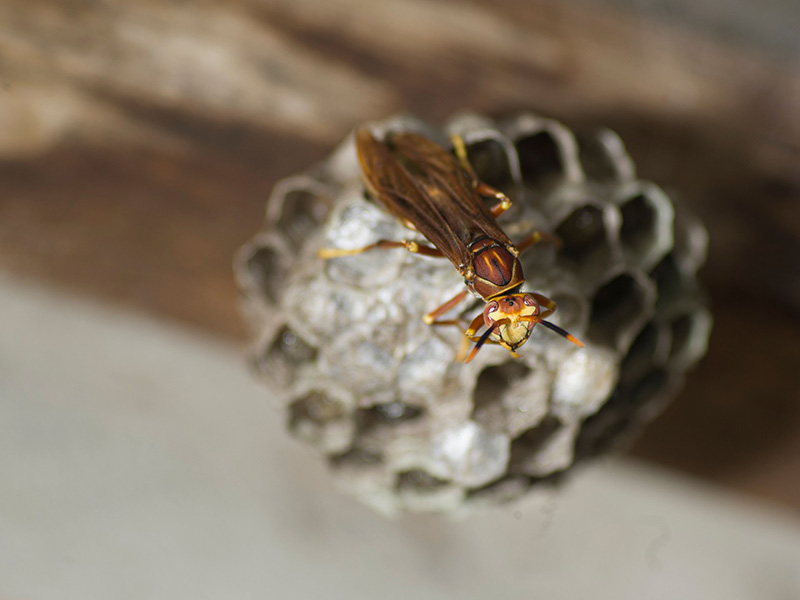
What Is an Earwig?
Earwigs are what entomologists call an occasional invader — an outdoor insect that ends up inside by accident rather than one that lives and breeds there. It's a useful distinction because it means that finding a few indoors is a sign that something is happening just outside. EnviroPest identifies and treats earwigs across the Front Range and Northern Colorado.
What Does an Earwig Look Like?
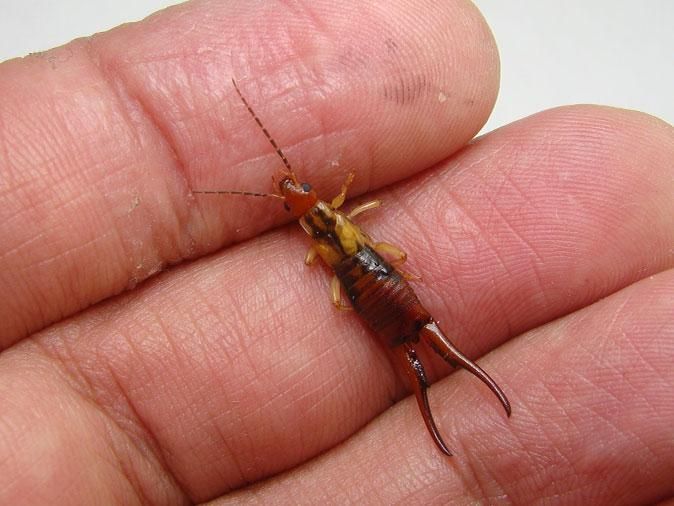
While you may know them as a “pincher bug”, earwigs are an insect easily recognized by their long, smooth bodies and pair of appendages at the tip of their abdomen called “cerci”. Pincer-like in appearance, the cerci are fairly straight on female earwigs and tend to be more curved on the male of the species.
Earwig Identification at a Glance:
- Size: About 5/8 inch long, roughly the length of a paperclip (sometimes larger)
- Color: Dark brown to reddish-brown
- Body: Smooth, elongated
- Pincers (cerci): Straight in females, curved in males
- Wings: Two pairs, with the hind wings folded up beneath the short front covers. Earwigs can fly but are rarely seen doing it — most travel on foot
When are earwigs most active?
In Denver and across the Front Range and Northern Colorado, earwigs are generally active from April through October. Activity increases in late spring and is typically highest from June through August, when warm weather and moisture create favorable conditions. Earwig activity usually declines in September and October, with little to no activity from November through March.
What Else Gets Mistaken for an Earwig?
First, the easy one: a pincher bug is an earwig. Same insect, different name — the pincers are where it comes from, and there's no separate species to worry about.
The real mix-ups are two other insects. Rove beetles are the closest call: same long, narrow, dark body, same habit of raising the rear end when disturbed. The tell is the back end — a rove beetle has no forceps there, just a plain tapered abdomen. Young German cockroaches get named as earwigs fairly often, too, but a nymph roach has long sweeping antennae, a broader flattened body, and moves in fast bursts, while an earwig is slower and more deliberate.
One more distinction worth knowing: an earwig's forceps are at the back. If the pincers are up front, by the head, you're most likely looking at a house pseudoscorpion — a tiny mahogany-brown arachnid, only about an eighth of an inch long, with crab-like arms it holds out ahead of itself. They turn up in Colorado homes now and then, usually in bathrooms or near books and stored paper, and they don't bite or sting people. They hunt dust mites and booklice, so finding one is more a sign of a humidity problem than anything else.
Where Do Earwigs Come From?
Outside. Nearly every earwig indoors started in the landscape within a few feet of the wall it came through.
Females lay eggs in damp soil and, unusually for an insect, stay with them — guarding the clutch and cleaning the eggs until the nymphs hatch. The nymphs look like small pale copies of the adults and molt through several stages before reaching full size. Most of what you find inside is an adult, and it arrived looking for moisture or shelter rather than a place to breed.
Are earwigs nocturnal? Yes. They spend daylight hours packed into dark, humid gaps and come out after dark to feed on decaying plant material, algae, and small insects. It's why a wall that looks clear at noon can have a dozen of them on it at ten at night.
The daytime hiding spots are the useful part, because they're the same ones every time: under mulch and landscape rock, beneath potted plants and stepping stones, in leaf litter, under loose siding and door thresholds, inside irrigation boxes, and along the damp strip of soil where a downspout drains.
What pushes them from those spots to your door is usually a moisture swing. A stretch of dry heat dries out the mulch, or heavy watering floods it, and either way they move — often toward the foundation, where conditions stay steady. That's when they end up in a garage, a crawl space, or a ground-floor bathroom.
Knowing that changes where you look. Heavy earwig activity on one side of a house often points at something fixable in the first three feet of landscape, and our technicians tend to find it there rather than indoors.
Are Earwigs Dangerous?
No. The old story about earwigs crawling into ears to burrow into the brain has no basis — it's a name that outlived its explanation. An earwig can pinch if you pick one up, and on a large one it may be enough to feel, but the forceps aren't strong enough to break skin and earwigs carry no venom. They don't bite, they don't transmit disease, and they pose no real risk to pets.
What they can damage is plants. Earwigs feed mostly on decaying material, but they'll also chew on living tissue — seedlings, soft fruit, and flower petals are the usual targets, and the damage shows up as small ragged holes rather than clean-edged bites. Dahlias, marigolds, and lettuce tend to take the worst of it, and a potted plant sitting against the house can get worked over faster than one out in the open. Indoors, the occasional houseplant gets nibbled, but that's the extent of it — earwigs don't damage structures, fabric, or stored food.
So the honest answer is that earwigs are a nuisance and a garden problem, not a health one. What usually drives people to call isn't the risk — it's the number.
Signs of an Earwig Problem
One earwig on the bathroom floor is an accident. A few things suggest there's a population right outside the wall rather than a stray:
- You keep finding them in the same room. Repeat sightings in one spot — usually a bathroom, laundry room, or the room over a garage — point to a nearby entry point rather than random wandering.
- You find them in the morning. Earwigs move at night, so what turns up in a sink or tub overnight is often the clearest count you'll get.
- They're clustered outside. Lift a piece of mulch, a paver, or a flowerpot near the foundation. Earwigs gather in groups under cover, and finding a dozen in one lift tells you more than anything you'll see indoors.
- Ragged holes in the garden. Chewed petals and leaves with irregular edges, especially on plants closest to the house, often show up before anyone notices earwigs inside.
- Damp spots line up with sightings. A leaking spigot, a downspout dumping at the foundation, or a mulch bed that stays wet is usually within a few feet of where they're getting in.
How Can I Get Rid of Earwigs?
The earwigs you see inside are often only a small part of the activity around your home, which is why indoor DIY spraying tends to disappoint. You may knock down the earwigs in the bathroom, only to see more move in from mulch, landscaping, and other outdoor hiding places.
Effective earwig control usually starts outside. That means targeting the soil, mulch, and rock along the foundation, where earwigs harbor during the day, as well as common entry points such as door thresholds, utility penetrations, weep holes, and gaps behind siding. It also means addressing excess moisture, because damp mulch and landscaping can continue to attract earwigs.
Store-bought products can fall short when they don’t reach the places earwigs are actually hiding. Spraying exposed surfaces around the foundation may provide temporary control, but weather, irrigation, and sun can reduce how long some treatments remain effective. And granules scattered over the surface of deep mulch may never reach the cool, damp layer where earwigs spend the day.
EnviroPest’s home pest control program covers earwigs on a recurring schedule, so the exterior barrier gets renewed before it thins out rather than after you spot them again. If earwigs are getting in through structural gaps, Enviro Guard handles the exclusion side — sealing the openings so treatment has less work to do. For homes where product choice matters, our eco-friendly options are available.
Earwig Prevention Tips
Exclusion helps, but moisture around the home is often the bigger factor in earwig activity.
- Pull mulch and rock back from the foundation. A few inches of bare, dry soil against the wall removes the daytime harborage. Where mulch stays, keeping it shallower than about two inches gives them less to hide in.
- Water less often and earlier. Deep, infrequent morning watering lets the surface dry by nightfall, when earwigs are out. Evening watering leaves the ground damp through their active hours.
- Check where downspouts land. A downspout emptying beside the foundation keeps one strip of soil permanently wet, and that’s usually the side of the house with the earwig problem. Extensions that carry water several feet out fix it.
- Move the lights, or change the bulbs. Porch and landscape lighting draw them toward the door. Aiming fixtures at the entry from a distance or switching to warmer-toned bulbs pulls the gathering point away from the threshold.
- Clear the leaf litter, boards, and stacked pots sitting against the house. Each one is a daytime shelter within crawling distance of the door.
- Seal the gaps that remain. Foundation cracks, door sweeps that no longer meet the threshold, gaps around exterior windows, and damaged siding should all be repaired or replaced.
The same conditions that attract earwigs also attract crickets, centipedes, sowbugs, and other pests, so this list tends to address more than one problem at once.

Testimonials
GETTING STARTED IS AS EASY AS 1-2-3
REQUEST QUOTE & SCHEDULE
EnviroPest Blog & News

Common Summer Pest Problems Along Colorado’s Front Range

What Is the Best Way to Get Rid of Ants in My Colorado Home?