
Are Termites Active All Year in Colorado?
Yes—but termite activity is not equally intense throughout the year.
Colorado’s subterranean termite colonies survive underground through winter. Frozen topsoil usually limits outdoor foraging, while termites with protected access to warmer soil, foundations, crawl spaces, or heated buildings may continue feeding.
In other words, cold weather can slow termites down, but it does not eliminate an established colony or guarantee that a home is safe from winter termite damage.
Which Termites Cause Damage in Colorado?
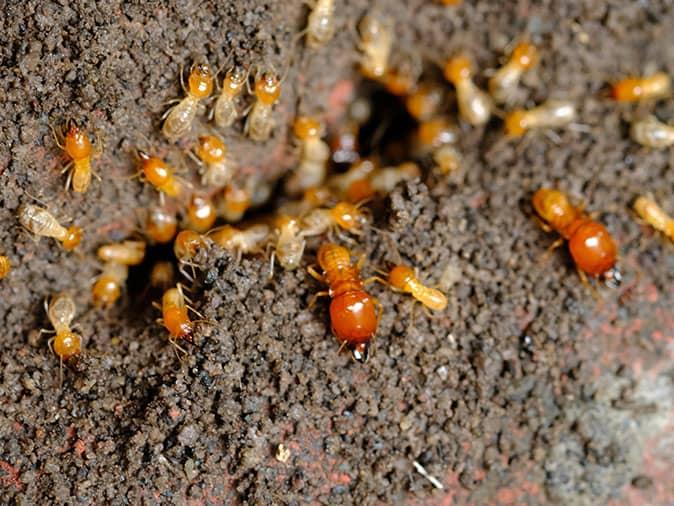
The eastern subterranean termite is the species usually responsible for structural termite damage in Colorado, according to Colorado State University Extension.
As their name suggests, subterranean termites live primarily in soil. Workers travel between underground colony areas and food sources through the soil, foundation openings, and protective shelter tubes commonly called mud tubes.
These termites depend on moisture. Their underground tunnels and mud tubes maintain the humid conditions they need while allowing workers to reach wood and other materials containing cellulose.
Colorado State University has also documented drywood termites in a small area near Grand Junction. Drywood termites behave differently and require different management decisions. This article focuses on subterranean termites, which cause most structural termite problems in Colorado and are the termites targeted by the Sentricon® System.
What Happens to Termites During a Colorado Winter?
Termites are cold-blooded insects, so temperature affects how quickly they move, forage, feed, and develop. When soil near the surface freezes, subterranean termite activity in that area usually slows sharply or temporarily stops.
The colony itself does not necessarily die. Termites can move deeper underground, where temperatures are more stable. They may also remain active beneath or inside a heated structure if they have access to sufficient warmth and moisture.
As Colorado temperatures rise in spring, termites generally become more active closer to the surface. Warm, moist conditions may also lead mature colonies to produce winged termites known as swarmers.
Outdoor air temperature only tells part of the story. Conditions in the soil, around the foundation, and inside the structure determine whether termites can continue feeding during winter.
Can Termites Damage a Colorado Home During Winter?
They can, particularly when they already have protected access to the structure.
A basement, crawl space, slab, plumbing penetration, foundation crack, or similar route may allow termites to travel from deeper soil into a warmer part of a building. If that route remains warm and humid enough, workers may continue feeding even while the yard is frozen or covered with snow.
Winter activity will not be the same in every infestation. Some colonies may have little or no access to structural wood while the upper soil is frozen. Others may remain active beneath or inside a heated building.
The most accurate way to explain Colorado’s winter termite risk is this:
Subterranean termite colonies survive year-round in Colorado, while their feeding and foraging activity changes with soil temperature, moisture, depth, and access to heated structures.
Do Termites Hibernate?
Hibernation is not the best way to describe how subterranean termites respond to winter.
They do not enter the kind of prolonged hibernation associated with some mammals. Instead, cold conditions reduce their movement and feeding near the surface. The colony survives in protected areas and becomes more active again when conditions improve.
Some termites may remain active during winter if they have access to sufficiently warm soil or structural spaces. Others remain deeper underground until the upper soil warms.
Does Seeing Nothing in Winter Mean the Termites Are Gone?
No. Termites are difficult to detect during any season because most of their activity occurs inside soil, shelter tubes, or wood.
Winter can make an infestation even less noticeable because homeowners are less likely to see swarmers or obvious outdoor activity. A colony can remain present even when no live termites are visible.
The absence of swarmers, discarded wings, or visible mud tubes is not proof that a property is termite-free. A professional inspection considers the structure, moisture conditions, possible entry points, visible damage, and other evidence—not just whether termites happen to be visible that day.
What Winter Termite Activity Can Look Like
Termites are usually less visible during a Colorado winter, but evidence may still appear inside or around a heated structure. Homeowners might discover mud tubes on basement or foundation walls, pale worker termites exposed during repairs, or winged termites emerging from an unusually warm area indoors.
Not seeing these warning signs does not prove that a property is termite-free. Most subterranean termite activity remains hidden inside soil, shelter tubes, and structural wood.
Learn more: Signs of Termite Infestations Every Denver Homeowner Should Know.
What Conditions Increase a Colorado Home’s Termite Risk?
Colorado’s climate may be dry overall, but conditions immediately around a home can provide the moisture and protection subterranean termites need.
Wood Touching the Soil
Deck supports, siding, trim, landscaping timbers, and other wood components should not directly contact soil unless they were designed and treated for that use.
Colorado State University recommends maintaining at least eight inches of clearance between soil and wooden shingles or supports where practical.
Wood and Cellulose Near the Foundation
Buried lumber, construction debris, old stumps, cardboard, and scrap wood can provide food close to a structure. Store firewood off the ground and away from the house rather than against an exterior wall.
Persistent Moisture
Repair plumbing leaks and correct drainage or grading that keeps soil beside the foundation consistently wet. Pay particular attention to downspouts, irrigation heads, crawl spaces, shaded planting beds, and areas beneath decks.
Colorado’s dry regional climate does not eliminate termite risk. Irrigation, leaks, and building conditions can create localized areas with enough moisture to support termite activity.
Foundation and Utility Openings
Cracks and gaps around foundations, plumbing lines, and utility penetrations can provide concealed routes into a structure. Sealing accessible openings may reduce potential entry points, although sealing alone cannot eliminate an established colony.
Hidden Foundation Areas
Dense vegetation, stored materials, excessive mulch, and high soil levels can conceal mud tubes and other evidence. Keeping an accessible inspection area around the foundation makes activity easier to identify.
What Should You Do If You Find Termite Evidence in Winter?
If you're worried about termite activity in your home over the winter, do not wait until spring to have it checked.
Avoid spraying or disturbing the area if possible. Visible termites may represent only a small part of a colony hidden in the soil or structure.
Reach out to EnviroPest. One of our licensed termite professionals will inspect the evidence, determine whether termites are active, and explain the best next step for your property.
Contact EnviroPest to request a termite inspection and free estimate.
How Does the Sentricon® System Work?
EnviroPest uses the Sentricon® System with Always Active™ technology for subterranean termite control.
The process begins with an inspection. A trained professional examines the property for live termites, shelter tubes, damaged wood, possible entry points, and conditions that may support an infestation.
Sentricon® stations containing Recruit® HD termite bait are then installed in professionally selected locations in the soil around the structure. The bait is present in the stations from the time they are installed.
As subterranean termites naturally forage through the soil, they can encounter the stations and feed on the bait. The stations do not pull termites in from distant locations or cause a termite infestation. They are positioned to intercept termites already foraging around the structure.
Termites carry and share food with other members of their colony. Recruit HD contains noviflumuron, an insect growth regulator that prevents subterranean termites from successfully molting and developing.
As termites continue feeding on the bait, the colony declines until it can no longer sustain itself. This process results in elimination of the subterranean termite colony, including the queen.
The stations remain in place after a colony has been eliminated. When they are professionally inspected, serviced, and replenished according to label directions, the Sentricon® System provides ongoing prevention and elimination of subterranean termite colonies.
Does Sentricon Work During Winter?
Sentricon® stations remain installed, and the bait remains available throughout the year.
Termites may be less likely to encounter or feed from a particular station while the surrounding soil is frozen. That does not make the system inactive or remove the need for year-round protection.
Sentricon® is not based on a one-time seasonal application. The bait remains in place so foraging termites can encounter it whenever conditions allow them to move through the surrounding soil.
Regular professional inspection and service are essential. Stations must remain properly positioned and be inspected and replenished as directed to provide continued structural protection.
When Is the Best Time for a Termite Inspection in Colorado?
A termite inspection can be performed at any time of year.
Spring and fall may produce more visible evidence because winged termites commonly emerge during warmer conditions. Winter is still an appropriate time to investigate mud tubes, damaged wood, moisture problems, or insects found inside a heated building.
There is no benefit in waiting for swarm season if you have already found evidence that may indicate a termite infestation.
Frequently Asked Questions About Colorado Termites
Are termites active when there is snow on the ground?
They can be. Snow and freezing air may reduce activity near the soil surface, but they do not reveal what is happening in deeper soil or beneath a heated structure. A colony may remain active in protected areas.
Does frozen ground kill subterranean termites?
Frozen topsoil can limit termite movement and feeding near the surface. However, an established colony can survive deeper underground, where temperatures are more stable. A winter freeze should not be considered a form of termite control.
Do termites swarm during winter in Colorado?
Outdoor swarming is generally associated with warmer seasonal conditions, commonly during spring or fall. A winter swarm would be unusual, although winged termites may occasionally emerge from an especially warm area inside an infested building.
Can termites keep eating wood inside a heated basement?
Yes. Termites may continue feeding if they have a protected route from suitable soil and access to enough warmth and moisture. Heated basements, crawl spaces, and other sheltered structural areas can support winter activity.
Should I wait until spring to address possible termite activity?
No. You do not need to panic, but suspicious evidence should be identified promptly. An inspection can determine whether termites are present and whether immediate action is appropriate.
Does the Sentricon® System attract termites to a property?
No. Sentricon does not draw termites to your home or bring them in from neighboring properties. Subterranean termites naturally forage through the soil in search of food. Sentricon stations are placed around the structure so termites already foraging nearby can encounter and feed on the bait.
Are termites common throughout Colorado?
Termite pressure varies by location, elevation, moisture, soil conditions, development, and individual property conditions. Eastern subterranean termites are established in Colorado and are an increasing concern in urban areas, but not every home faces the same level of risk.
Local Termite Control Help From EnviroPest
EnviroPest has served Colorado communities since 1965. Our licensed termite professionals inspect properties for active termites, structural evidence, possible entry points, and conditions that may contribute to an infestation.
We provide termite control services for homes and businesses across Denver, Boulder, Colorado Springs, the Front Range, and Northern Colorado.
If you have found mud tubes, discarded wings, suspicious insects, or damaged wood, contact EnviroPest to request an inspection and free estimate.

Testimonials
GETTING STARTED IS AS EASY AS 1-2-3
REQUEST FREE ESTIMATE
Pest Solutions For Homes & Businesses
We understand that pest problems can be unsettling and frustrating, but the solution shouldn't be. For over 55 years, we've been helping folks right here in Colorado take care of ants, spiders, mice, mosquitoes, wasps, bed bugs, bats and most other creepy crawly things. We'll get there fast to solve the issue quickly and affordably - Guaranteed.


EnviroPest Blog & News
Why Are Spiders and Earwigs Showing Up Upstairs in Greeley Homes?
Why Crickets Are Getting Into Colorado Homes in Late Summer