
Signs Of Bed Bugs In Denver & Northern Colorado Homes (With Photos)
Worried you might have bed bugs? You’re not alone.
If you’re seeing possible signs of bed bugs in Denver, Boulder, Fort Collins, Loveland, or anywhere in Northern Colorado, the fastest way to get clarity is to start with the signs that actually confirm bed bug activity — then do a quick inspection of the most likely hiding places.
If bites are your main concern and you want help telling bed bug bites apart from other causes, read Bed Bug Bites vs Other Bites.
If you’d like a quick reference on what bed bugs look like, see Bed Bug Identification.

What This Blog Covers:
- The six common signs of a bed bug problem
- How to check for bed bugs in five minutes or less
- Why responding to a bed bug infestation quickly is essential
- What not to do if you discover these biting pests in your space
- How EnviroPest exterminates bed bugs - completely!
The Most Reliable Signs of Bed Bugs
Some clues are stronger than others. Here are the signs most often associated with bed bug infestations.
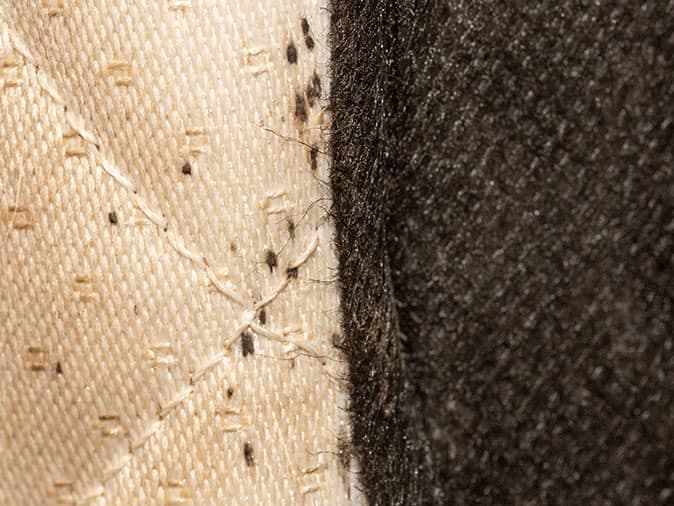
Fecal Spotting (Black Dots or Ink-Like Smears)
This is one of the strongest signs because it tends to appear close to hiding spots, especially along seams and cracks.
Reddish-Brown Stains
Small stains on sheets or along mattress seams can occur for various reasons, but when they appear alongside other evidence, they become more meaningful.
Shed Skins
Bed bugs shed as they grow. Finding pale, paper-thin shells in seams, folds, or cracks can indicate ongoing activity.
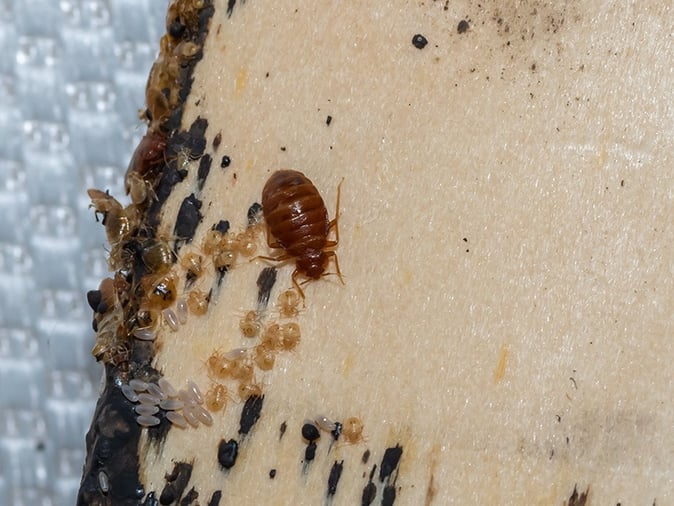
Eggs (And Egg Shells)
Eggs are tiny and pearl-white, often tucked into protected seams and corners.
Live Bed Bugs
Live bugs are typically reddish-brown and oval. Seeing a live bug is obviously a strong sign, but many people don’t see one in early-stage infestations.
Bites (Important, But Not Proof On Their Own)
Bites are often what trigger concern, but reactions vary widely, and other pests can look similar. Use bites as a clue—and confirm with physical evidence from the areas below.
Where to Look: A 5-Minute Bed Bug Inspection Flow
Use a flashlight (your phone works). Move slowly and focus on seams, folds, and tight cracks.
1) Mattress Seams and Corners
Look for:
-
Black spotting along seams
-
Small stains near piping and corners
-
Shed skins caught in folds
2) Box Spring Edges and Underside
Look for:
-
Spotting where fabric meets wood
-
Eggs tucked into corners
-
Shed skins near staples, folds, or the dust cover
Tip: If you can safely lift the edge of the dust cover slightly, look inside with your flashlight.
3) Headboard Joints and Bed Frame Cracks
Look for:
-
Spotting near screws and brackets
-
Shed skins trapped in joints
-
Live bugs (more likely as activity increases)
4) Nightstands, Drawers, and Nearby Clutter
Look for:
-
Spotting along drawer corners and joints
-
Evidence in cracks around handles and rails
-
Shed skins near tight corners
5) Upholstered Furniture (If You Nap or Lounge There)
Look for:
-
Evidence in seam piping and under cushions
-
Spotting in folds and corners
6) Baseboards and Wall Edges Near the Bed
Look for:
-
Dark spotting in gaps
-
Shed skins along edges
If you live in a multi-unit building, it’s especially important to act quickly—bed bugs can spread between units.
If you keep dealing with recurring issues, read Why Bed Bugs Keep Coming Back.
Bed Bugs in Denver & Northern Colorado: Why Acting Fast Matters
If you’re finding signs of bed bugs in Denver, Boulder, Fort Collins, Loveland, or surrounding Northern Colorado communities, confirming activity early makes a major difference.
In this region, infestations often begin after:
-
Travel through Denver International Airport
-
Guests staying overnight
-
Secondhand furniture purchases
-
Moves between apartments, condos, or townhomes
Because bed bugs hitchhike in luggage, backpacks, and furniture, they’re frequently introduced unintentionally — even in clean, well-maintained homes and properties.
In Colorado’s dry climate, they remain active year-round inside heated buildings.
We regularly see infestations that start with a single introduction — a trip, a guest, or a neighboring unit — and expand when early signs are missed.
What This Means for Denver & NoCo Property Owners
Whether you manage or live in a:
-
Single-family home
-
Townhome or duplex
-
Condominium
-
Multi-unit residential building
-
Hotel or short-term rental property
-
Healthcare or senior living facility
…confirming activity early can prevent spread into additional rooms, adjoining units, or guest spaces.
Bed bugs rarely stay isolated to one room. In multi-unit or multi-room environments, they can move into neighboring spaces and increase treatment complexity if not addressed promptly.
What Not to Do If You Think You Found Bed Bugs
-
Don’t move bedding, pillows, or clothing into other rooms (it can spread them).
-
Don’t throw away your mattress right away (it often doesn’t solve the problem)
-
Don’t rely on quick DIY sprays as a “first and only” solution.
DIY treatments rarely eliminate hidden eggs, which is why infestations often return within weeks.
What Denver and Northern Colorado Residents Should Do Next
If you’ve found more than one confirmed sign — especially fecal spotting combined with shed skins, eggs, or live bugs — it’s time for a professional inspection.
Early-stage infestations are significantly easier to resolve than widespread ones.
EnviroPest has served Denver and Northern Colorado for decades. Our licensed technicians work daily in homes, apartments, hotels, and healthcare facilities throughout the region, and we understand how bed bugs behave in Colorado properties — from historic Denver homes to modern Fort Collins developments.
We don’t rely on surface-level treatments. We identify harborages, eliminate active bugs and eggs, and implement targeted strategies designed to stop recurrence.
We develop targeted bed bug treatment plans based on the structure, occupancy, and severity of the infestation — whether that involves a single bedroom, multiple units, or guest-facing environments.
Our focus isn’t just on killing visible bugs; it’s on eliminating the entire infestation, including hidden eggs and hard-to-reach harborages.
Schedule a Professional Bed Bug Inspection in Denver & Northern Colorado
If you’re in the Denver metro or Northern Colorado, EnviroPest can help confirm activity and stop the problem before it spreads.
Schedule your bed bug inspection today!
Originally published January 24, 2024. Updated January 2026. This guide has been revised to provide the most accurate and up-to-date information for identifying bed bug activity in Denver and Northern Colorado.

Testimonials
GETTING STARTED IS AS EASY AS 1-2-3
REQUEST FREE ESTIMATE
Pest Solutions For Homes & Businesses
We understand that pest problems can be unsettling and frustrating, but the solution shouldn't be. For over 55 years, we've been helping folks right here in Colorado take care of ants, spiders, mice, mosquitoes, wasps, bed bugs, bats and most other creepy crawly things. We'll get there fast to solve the issue quickly and affordably - Guaranteed.


EnviroPest Blog & News
Why Are Spiders and Earwigs Showing Up Upstairs in Greeley Homes?

Why Crickets Are Getting Into Colorado Homes in Late Summer